Network relations
Functional relations with existing high-speed rail networks.
Application planning and scenario assessment
Functional relations, interfaces, and techno-economic comparisons between high-speed maglev and existing high-speed rail networks.
Back to research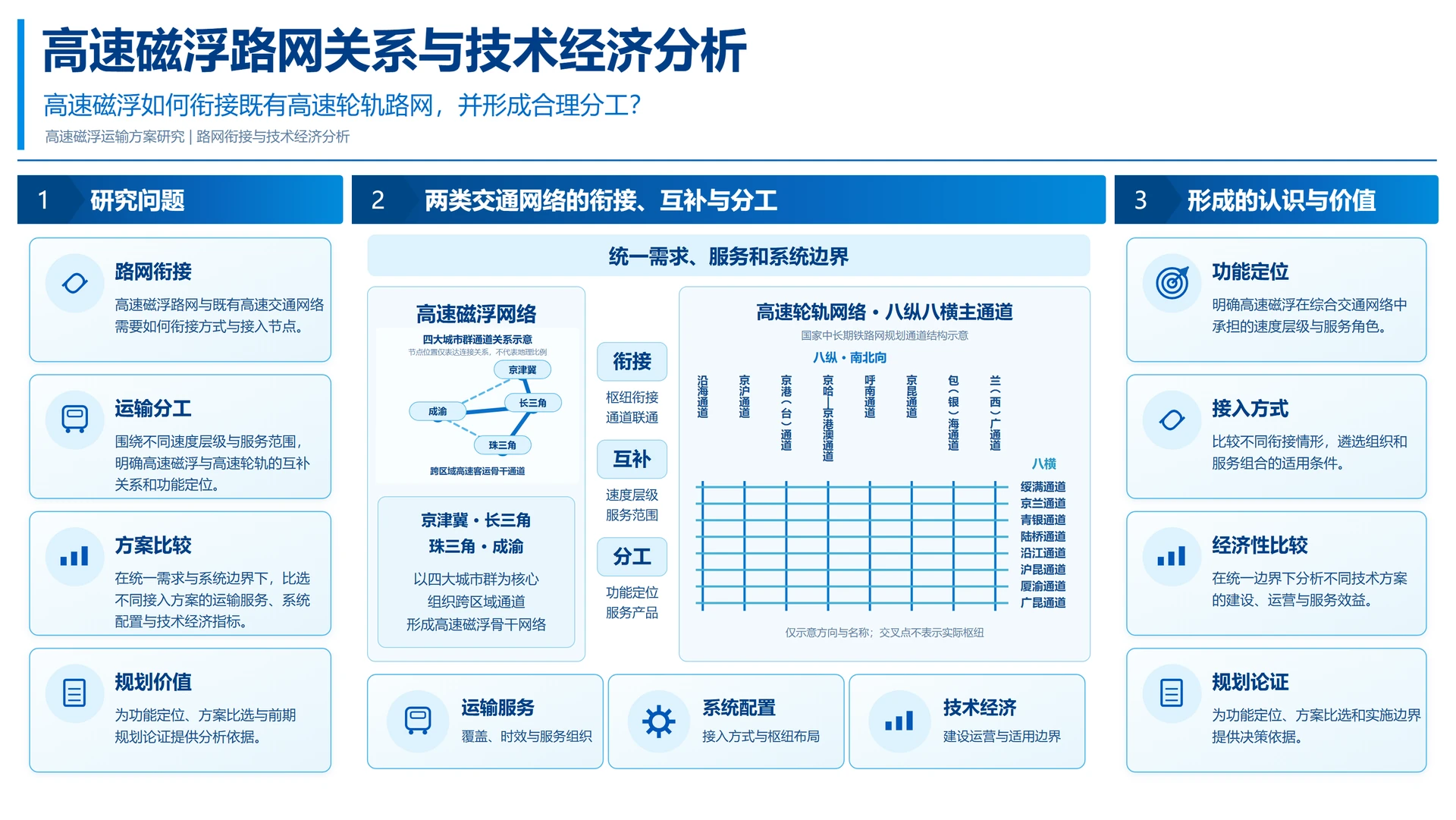
01 / OVERVIEW
Network structure, corridor conditions, and demand are used to compare access and service patterns and identify suitable applications and implementation boundaries.
KEY QUESTIONS
02 / RESEARCH CONTENT
Functional relations with existing high-speed rail networks.
Assessment based on demand, corridor conditions, and network structure.
Comparison of access, service, and system alternatives.
Evaluation of suitability, economics, and implementation boundaries.
03 / RELATED OUTPUTS
Industry project / 2022–2023
Research on network relations and economic comparison between high-speed maglev and high-speed rail alternatives.
View project ↗“Network, demand, and economics provide the basis for high-speed maglev planning decisions.”