NODE / 01
RESEARCH OVERVIEW
Research directions
A connected research system spanning transport organization, train operation, dispatching and traction power, from single vehicles to fleets and local control to network-level decisions.
SYSTEM / 01MAGLEV RESEARCH
01 / RESEARCH LOGIC
Research framework
Demand, planning, control and power are connected decisions. We study how constraints propagate across system levels.
NODE / 02
Organization
NODE / 03
Train coordination
NODE / 04
Operations control
NODE / 05
Traction power
02 / RESEARCH DIRECTIONS
Research directions
DIRECTION / 01
High-speed maglev networks and techno-economic analysis
Functional relations, interfaces, and techno-economic comparisons between high-speed maglev and existing high-speed rail networks.
High-speed maglevExisting networksOption comparisonEconomics
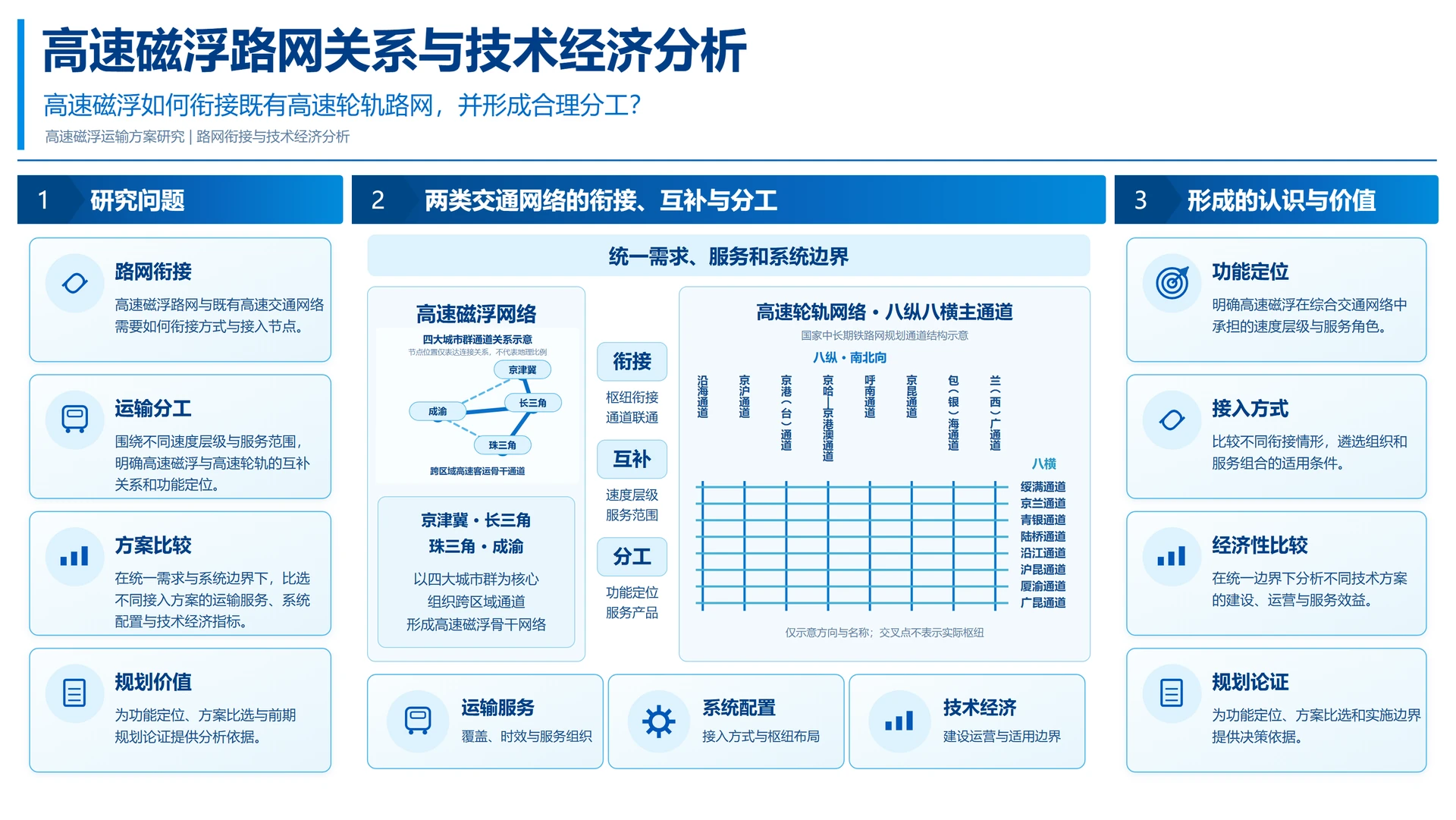
RESEARCH SCOPE
- Network relationsFunctional relations with existing high-speed rail networks.
- Demand and corridorsAssessment based on demand, corridor conditions, and network structure.
- Option comparisonComparison of access, service, and system alternatives.
DIRECTION / 02
Low-speed maglev freight models and planning assessment
Freight models, transport organization, system capacity, and cost for low-speed permanent-magnet maglev in urban logistics.
Low-speed maglevUrban logisticsFreight modelsPlanning
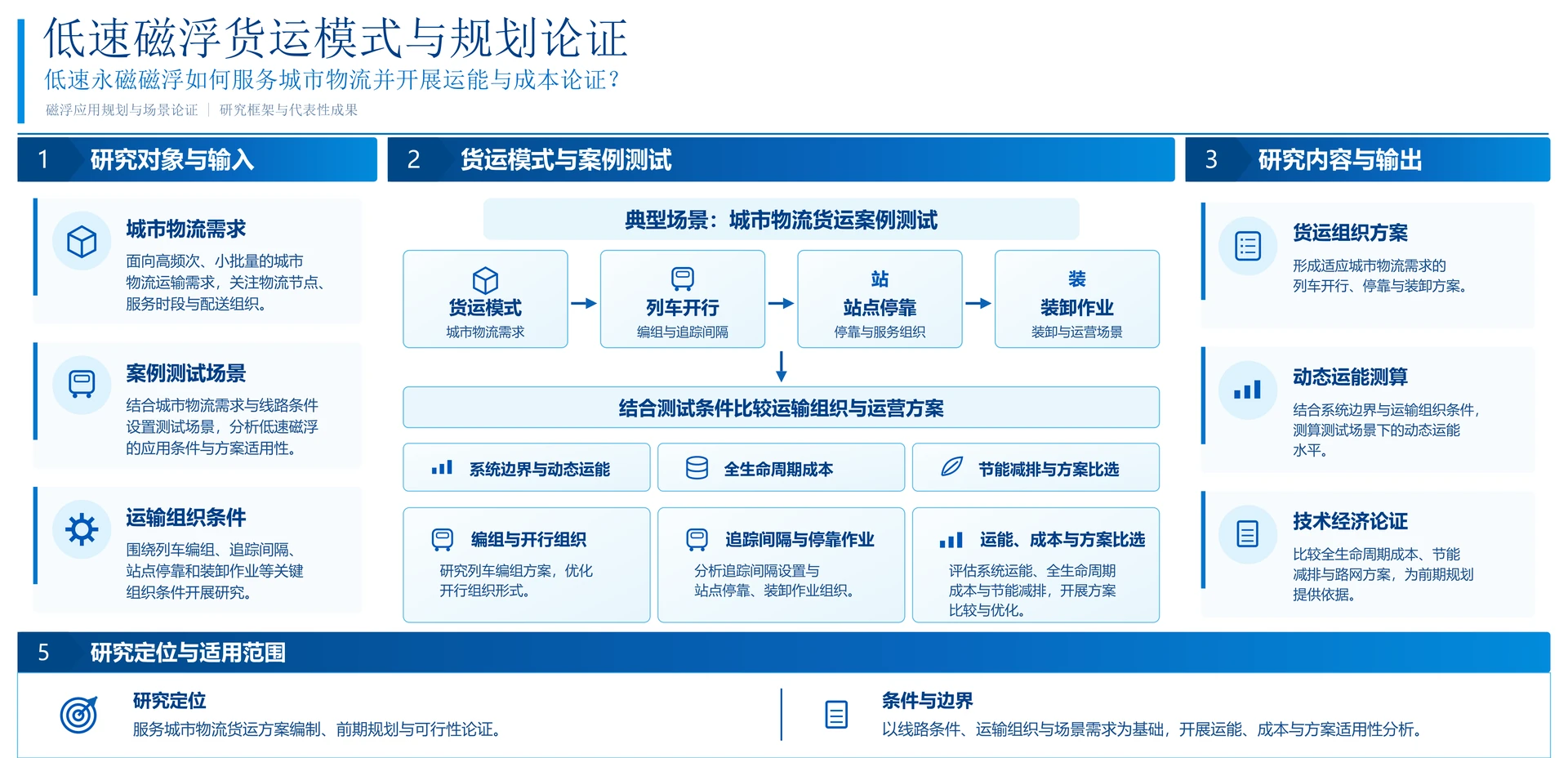
RESEARCH SCOPE
- Freight modelsLow-speed permanent-magnet maglev for urban logistics.
- Transport organizationFormation, headway, calls, and loading operations.
- Capacity and costSystem capacity, construction and operating cost, and service capability.
DIRECTION / 03
Train speed profiles and energy-efficient operation
Traction, cruising, coasting, and braking are optimized under line and running-time constraints for safe, punctual, and energy-efficient operation.
Speed profilesStopping areasLevitation energyEco-driving
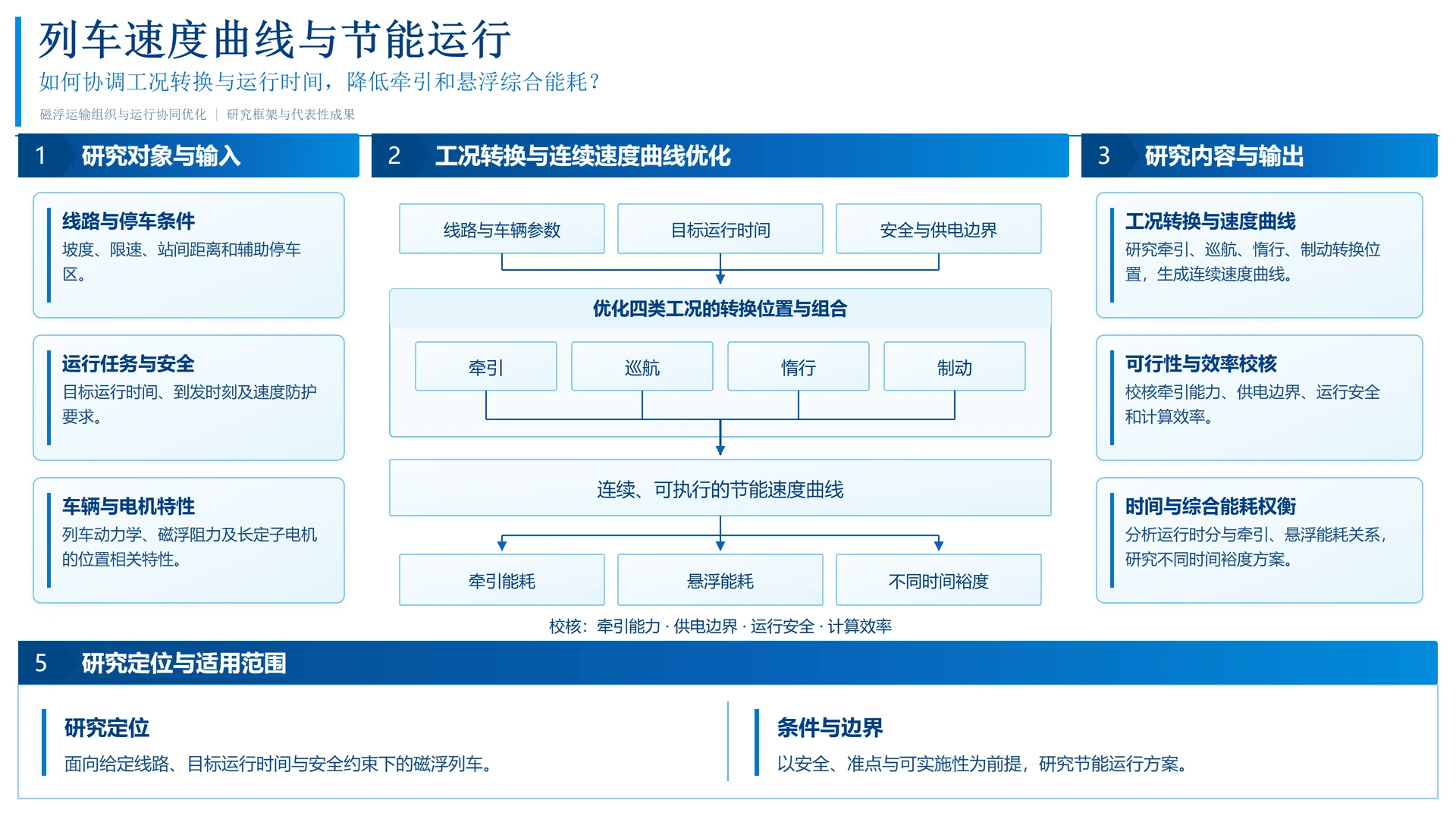
RESEARCH SCOPE
- Speed profilesEnergy-efficient profiles under line and operating constraints.
- Stopping areasFeasible trajectories incorporating auxiliary stopping areas.
- Combined energyPropulsion and levitation energy in one optimization framework.
DIRECTION / 04
Transport organization and operational dispatching
Service frequency, station calls, departures, and section running times are coordinated with headway and line-capacity checks.
DemandTimetablesHeadwayLine capacity
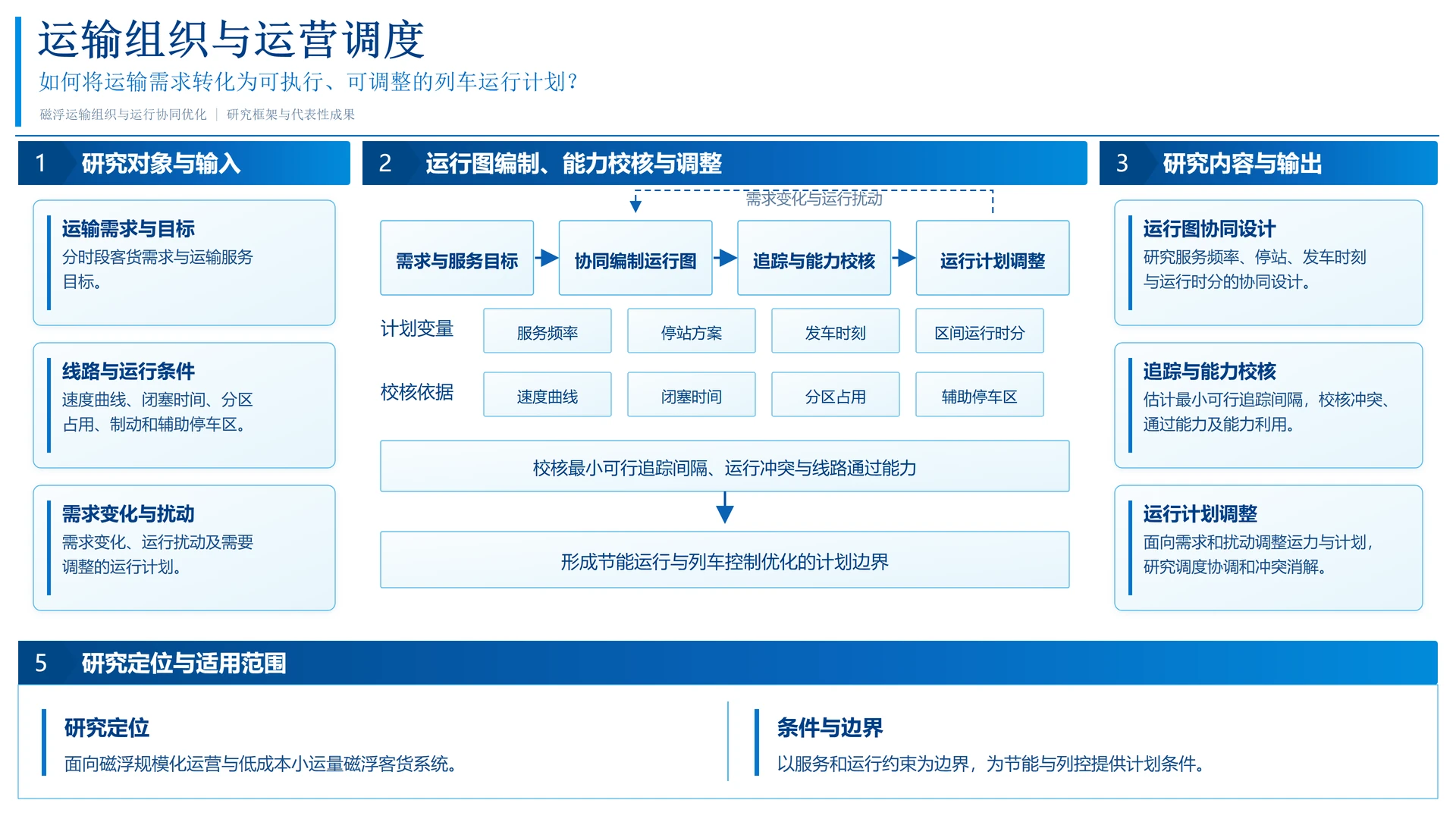
RESEARCH SCOPE
- Transport demandRelations between time-varying demand and service organization.
- TimetablesFrequency, calls, departure times, and section running times.
- Line capacityHeadway from blocking time and section occupancy.
DIRECTION / 05
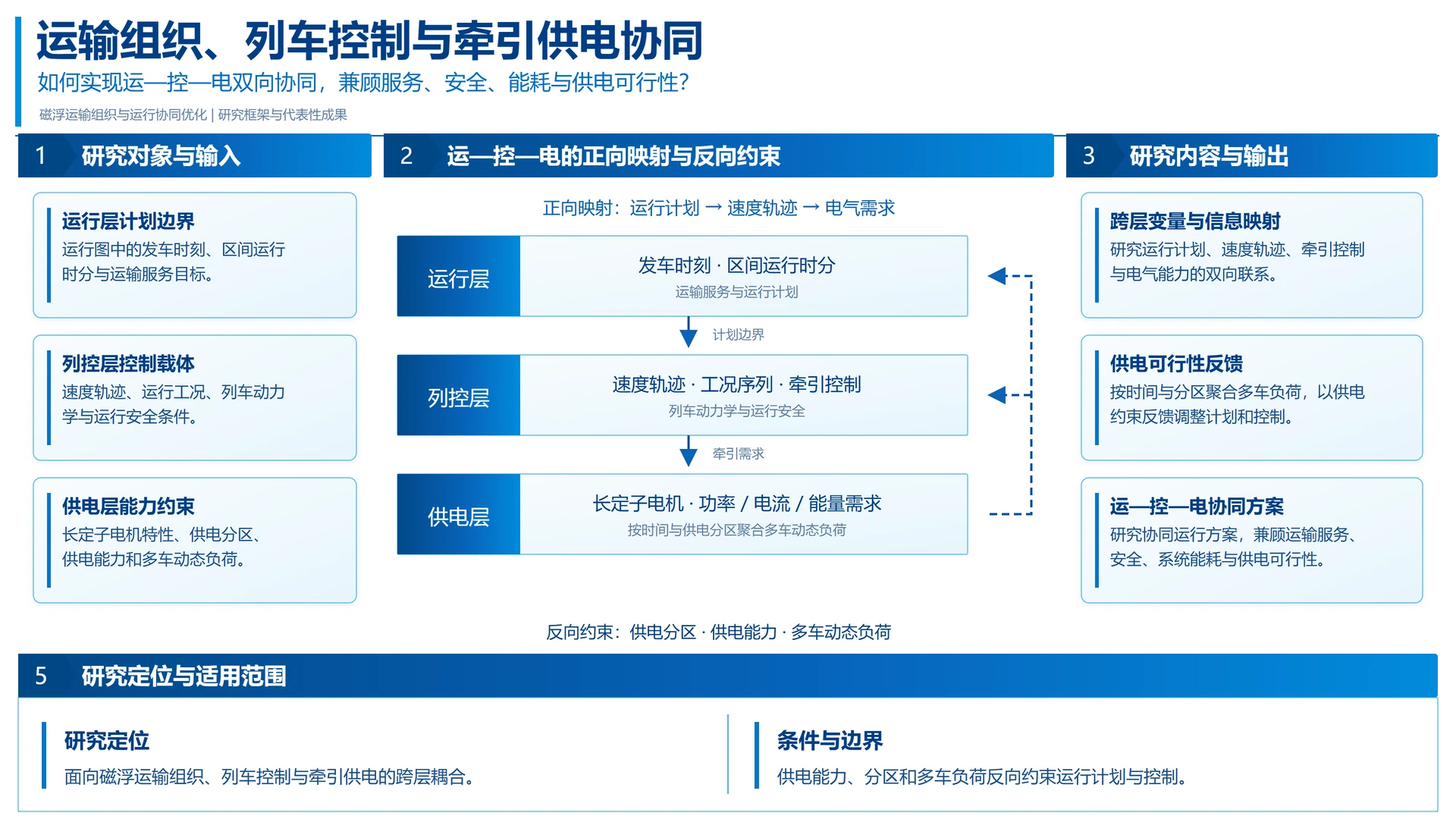
Coordination of organization, train control, and traction power
Timetables, speed trajectories, power capacity, and multi-train load are coordinated across transport, control, and power layers.
OrganizationTrain controlTraction powerLayered optimization
RESEARCH SCOPE
- Operation layerTimetables, departures, and section running times.
- Control layerSpeed commands satisfying line and safety constraints.
- Power layerMotor characteristics, capacity, and multi-train load.
03 / METHODS
Research methods
M / 01
Mathematical modeling
M / 02
Optimization algorithms
M / 03
Software implementation
M / 04
Simulation
M / 05
Option comparison
04 / RESEARCH HIERARCHY
Research hierarchy
A progression from application planning and scenario assessment to single-train operation, multi-train organization, and cross-layer operation-control-power coordination.
Planning and scenario assessment
Directions 1 and 2
Single-train operation optimization
Direction 3
Multi-train organization and dispatching
Direction 4
Cross-layer operation-control-power coordination
Direction 5